If you love pistachios and cheesecake, prepare to fall in LOVE with this Healthy High-Protein Pistachio Cheesecake (Gluten-Free!). It’s thick, rich, incredibly creamy, and packed with real roasted pistachio flavor. The best part? It’s made with wholesome ingredients, naturally sweetened with maple syrup, and everything comes together in your food processor!!
This isn’t your average cheesecake. We’re combining cream cheese, protein-packed cottage cheese, unflavored whey protein, and roasted pistachios to create a deliciously decadent dessert with a little nutritional upgrade. Each slice delivers approximately 19 grams of protein, making it a satisfying treat that tastes every bit as indulgent as traditional cheesecake.
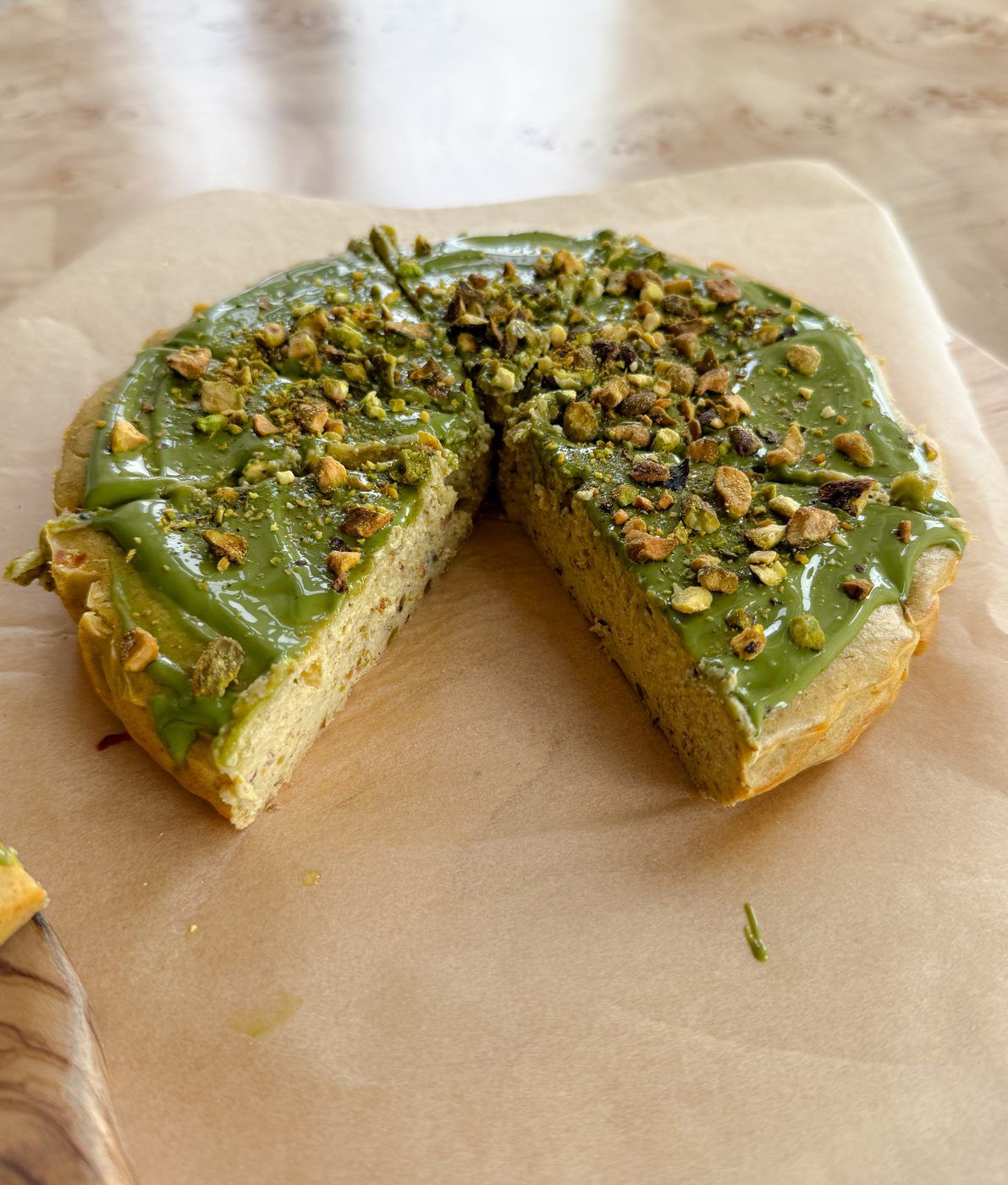
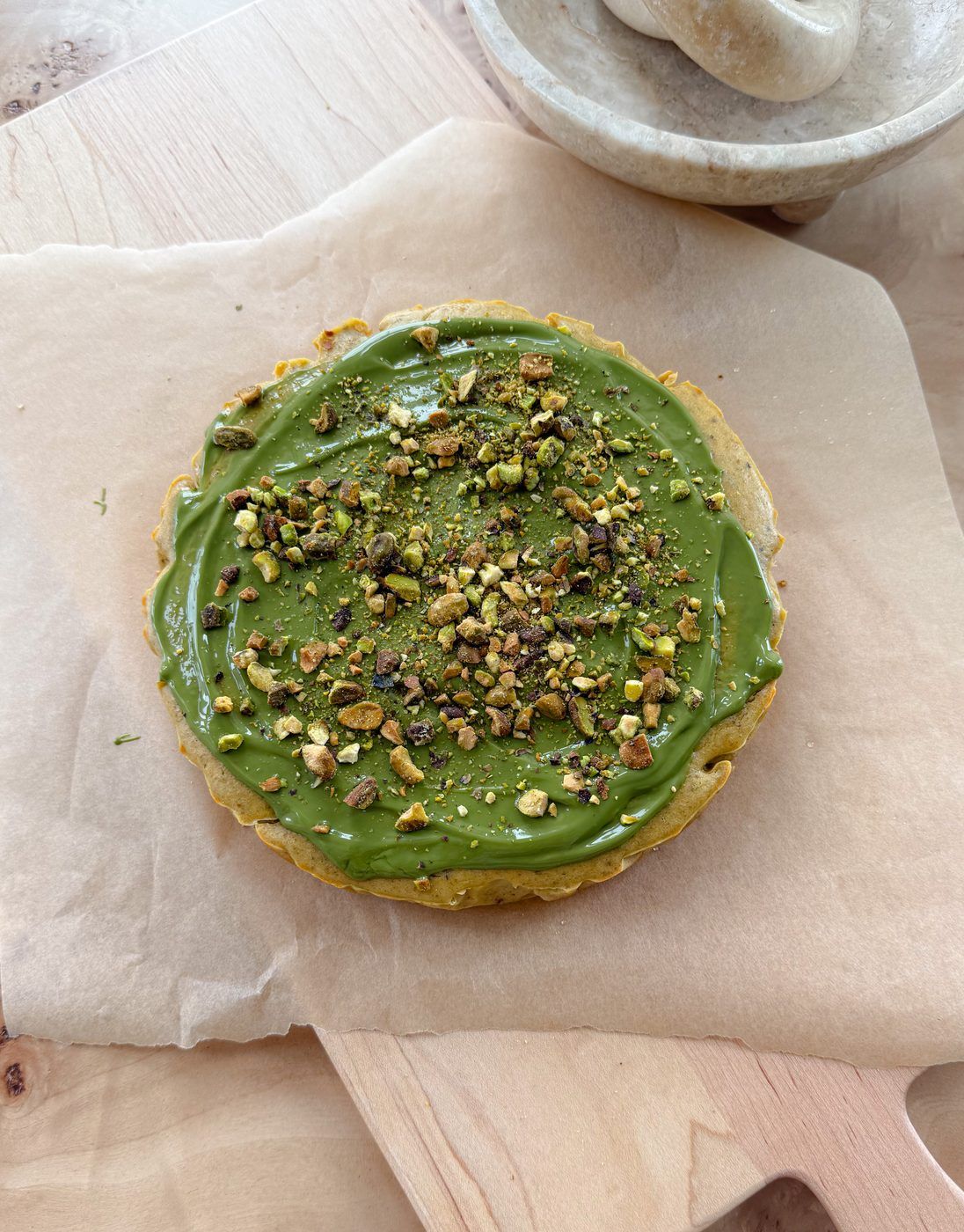
And while the cheesecake is absolutely delicious on its own, I highly recommend finishing it with a drizzle of creamy pistachio butter and a sprinkle of chopped roasted pistachios. The combination is DREAMY.
Whether you’re a pistachio lover, looking for a healthier dessert, or simply want a protein-packed sweet treat, this cheesecake deserves a spot on your baking list.
Why You’ll Love This Healthy Pistachio Cheesecake
High in protein: Thanks to cottage cheese, eggs, whey protein, and pistachios, each slice contains approximately 19 grams of protein without any toppings.
Made with real pistachios: No instant pudding mixes or artificial pistachio flavoring needed! Roasted pistachios provide a naturally rich, nutty flavor.
Easy food processor recipe: No stand mixer or complicated techniques required. Your food processor does nearly all the work!
Naturally sweetened: Pure maple syrup provides just the right amount of sweetness without refined sugar in the cheesecake itself.
Naturally gluten-free: This cheesecake contains no wheat flour or traditional graham cracker crust. Just be sure your protein powder and other packaged ingredients are certified gluten-free if needed.
Thick and creamy: The combination of cream cheese and cottage cheese creates a luscious cheesecake texture that firms up beautifully after chilling.
Perfect for meal prep: Make this cheesecake ahead of time and enjoy a delicious protein-packed dessert throughout the week.
What Makes This Cheesecake Healthier?
Traditional cheesecake is typically made with large amounts of cream cheese, sugar, and a buttery cookie crust. While absolutely delicious and what I love sometimes, I wanted to create a version that offered more protein while maintaining that classic cheesecake experience for everyday snacking!
The secret ingredient? Cottage cheese!
Cottage cheese blends beautifully in the food processor, creating a silky-smooth consistency without the noticeable curds. It also provides a substantial amount of protein.
We’re still using 8 ounces of cream cheese because cheesecake should taste like cheesecake! It adds that classic tangy richness and helps create the perfect texture.
Unflavored whey protein provides another protein boost without overpowering the pistachio flavor, while cornstarch helps stabilize the filling during baking.
Finally, roasted pistachios add healthy unsaturated fats, fiber, and an incredible nutty flavor that makes this dessert truly special.
The result is a healthier cheesecake that doesn’t feel like a compromise.
Ingredients You’ll Need
Roasted pistachios: The star of the recipe! I recommend shelled, unsalted roasted pistachios. Grinding them finely creates a delicious pistachio flavor throughout the cheesecake.
Cream cheese: Provides the rich, creamy texture that makes cheesecake so irresistible. Allow it to soften before blending for the smoothest results.
Cottage cheese: My favorite ingredient for boosting protein in healthier desserts. I recommend 2% or 4% cottage cheese for the best consistency.
Eggs: Help the cheesecake set and provide structure without needing a traditional crust.
Pure maple syrup: Naturally sweetens the cheesecake and complements the nutty pistachio flavor.
Unflavored whey protein: Adds extra protein without introducing another flavor. I recommend a whey protein that blends smoothly into baked goods.
Cornstarch: Helps the cheesecake set properly and makes it easier to slice once chilled.
Vanilla extract: Adds warmth and enhances the overall flavor.
Fresh lemon juice: Provides a subtle brightness that balances the richness of the cream cheese.
Almond extract: Optional, but a tiny amount enhances the pistachio flavor beautifully.
Sea salt: Balances the sweetness and brings out the roasted pistachio flavor (don’t add if using lightly salted!)
My Favorite Pistachio Cheesecake Toppings
While this high-protein pistachio cheesecake is delicious on its own, the toppings take it to another level!
My personal favorite combination is:
Pistachio butter drizzle: Warm a little unsweetened pistachio butter until it’s pourable, then drizzle it over the chilled cheesecake.
Chopped roasted pistachios: Sprinkle chopped pistachios over the top for a little crunch and even more pistachio flavor.
Honey: A beautiful drizzle of honey on top of pistachio butter is blissful!
You could also add fresh raspberries, strawberries, a little melted dark chocolate, or a dollop of Greek yogurt.
Keep in mind that the nutritional information below is calculated for the cheesecake itself and does NOT include optional toppings.
Tips for the Perfect High-Protein Cheesecake
Use softened cream cheese. Cold cream cheese can leave small lumps in the filling. Allowing it to soften makes blending much easier.
Blend the cottage cheese thoroughly. You shouldn’t see any noticeable cottage cheese curds in the finished batter.
Don’t overbake. The cheesecake should look set around the edges with a slight jiggle in the center. It will continue firming up as it cools.
Let it chill before slicing. This is probably the most important step! Although this cheesecake doesn’t require an overnight chill, giving it at least 2–3 hours in the refrigerator will help it develop that rich, creamy consistency.
Use parchment paper. Lining your 8×8-inch pan makes removing and slicing the cheesecake much easier.
Frequently Asked Questions
Can you taste the cottage cheese?
Not distinctly! Once blended with the cream cheese, roasted pistachios, maple syrup, and vanilla, the cottage cheese creates a creamy texture without noticeable curds or a strong cottage cheese flavor.
Can I use salted roasted pistachios?
Absolutely! Lightly salted roasted pistachios will work, but I recommend reducing or omitting the additional sea salt.
Can I use flavored protein powder?
Unflavored whey protein is my preference because it allows the pistachio flavor to shine. Vanilla whey could also work, although it may make the cheesecake sweeter depending on the brand.
Can I use low-fat cream cheese?
Yes! Reduced-fat cream cheese should work well, although the cheesecake may be slightly less rich and creamy than the full-fat version.
Do I need a water bath?
No! This recipe is designed to bake directly in an 8×8-inch pan without a water bath. Baking at a relatively low temperature helps the cheesecake cook gently and evenly.
A few small cracks are completely normal, especially with protein powder in the filling. And if you’re adding pistachio butter and chopped pistachios, nobody will notice anyway!
Why is my cheesecake still jiggly?
A slight jiggle in the center is normal when the cheesecake comes out of the oven. The edges should be set, and the center should not look liquid.
As the cheesecake cools and refrigerates, it will firm up considerably.
Can I make this cheesecake ahead of time?
Definitely! This is a fantastic make-ahead dessert. In fact, I think the texture becomes even better after several hours in the refrigerator.
How do I store leftovers?
Store the cheesecake in an airtight container in the refrigerator for up to 4–5 days.
For longer storage, freeze individual slices tightly wrapped in a freezer-safe container for up to 2 months. Thaw overnight in the refrigerator before enjoying.
I recommend adding the pistachio butter drizzle and chopped pistachios just before serving for the best presentation.
A Healthier Dessert for Pistachio Lovers
There’s something so special about a dessert made with real pistachios. Their naturally buttery, slightly sweet flavor pairs beautifully with the tanginess of cheesecake, and the texture is absolutely irresistible.
This Healthy High-Protein Pistachio Cheesecake proves that you can create a dessert with wholesome ingredients and an impressive amount of protein without sacrificing the flavors you love.
It’s creamy, rich, naturally sweetened, gluten-free, and made entirely in your food processor. What more could you want?
Don’t forget that extra pistachio butter drizzle and those crunchy chopped pistachios on top. Trust me, they’re worth it!
If you make this recipe, I’d love to hear what you think! Leave a comment below and share your creations with me on Instagram at @upbeetandkaleingit.
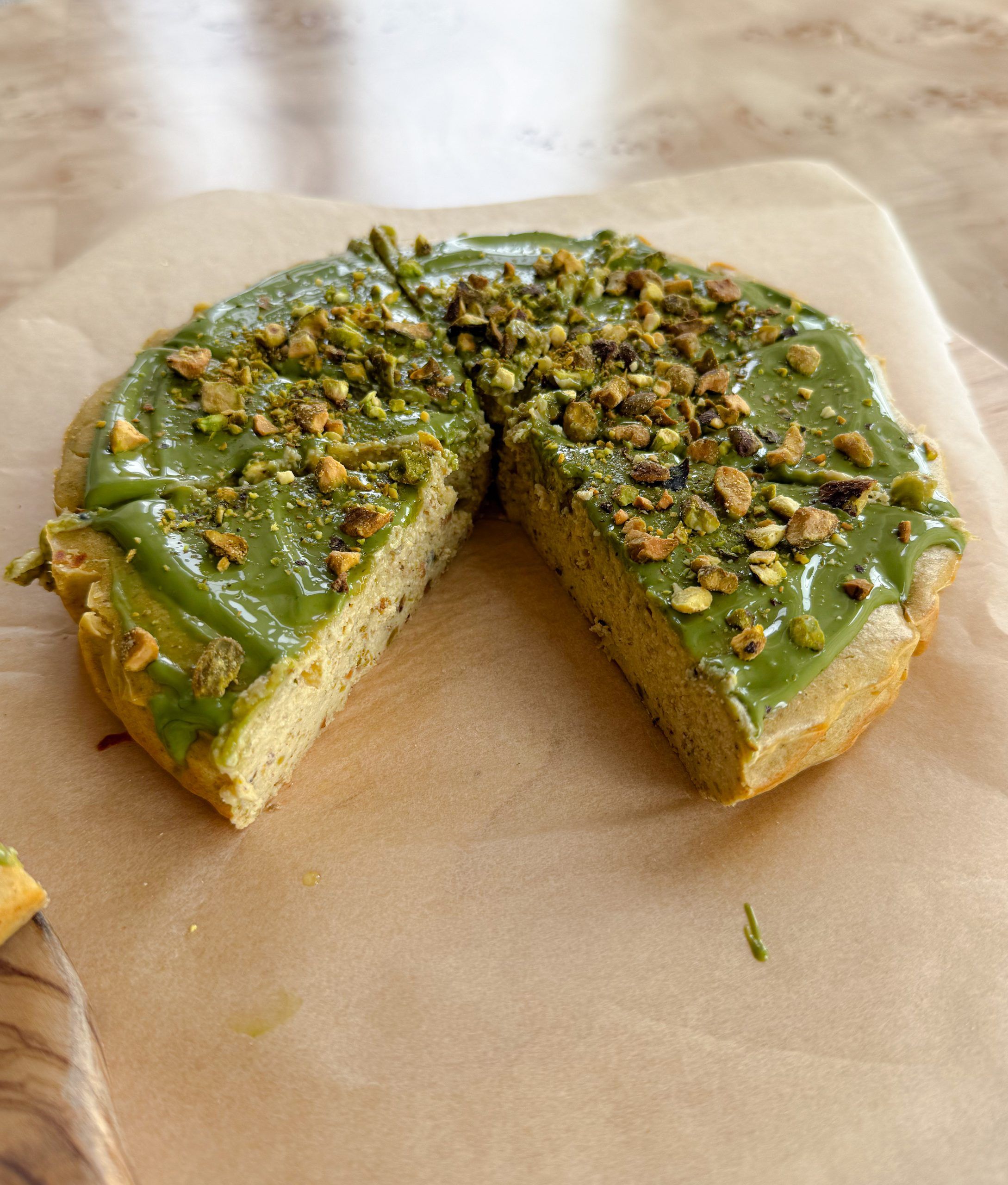
Healthy High-Protein Pistachio Cheesecake (Gluten-Free!)
Ingredients
Method
- Preheat oven to 325°F. Line an 8×8-inch baking pan with parchment paper, leaving some overhang for easy removal.
- Add the roasted pistachios, softened cream cheese, cottage cheese, eggs, maple syrup, unflavored whey protein, cornstarch, vanilla extract, lemon juice, almond extract (if using), and sea salt directly to a large food processor.
- Process until everything is well combined and the mixture is creamy, scraping down the sides as needed. Small flecks of pistachios throughout the batter are completely normal and add delicious texture!
- Pour the cheesecake mixture into the prepared baking pan and smooth the top with a spatula.
- Bake for 35–40 minutes, or until the edges are set and the center has a slight jiggle. If the center still looks liquid, continue baking in a few-minute increments.
- Allow the cheesecake to cool at room temperature for approximately 30–45 minutes, then transfer to the refrigerator for at least 2–3 hours, or until fully chilled and set.
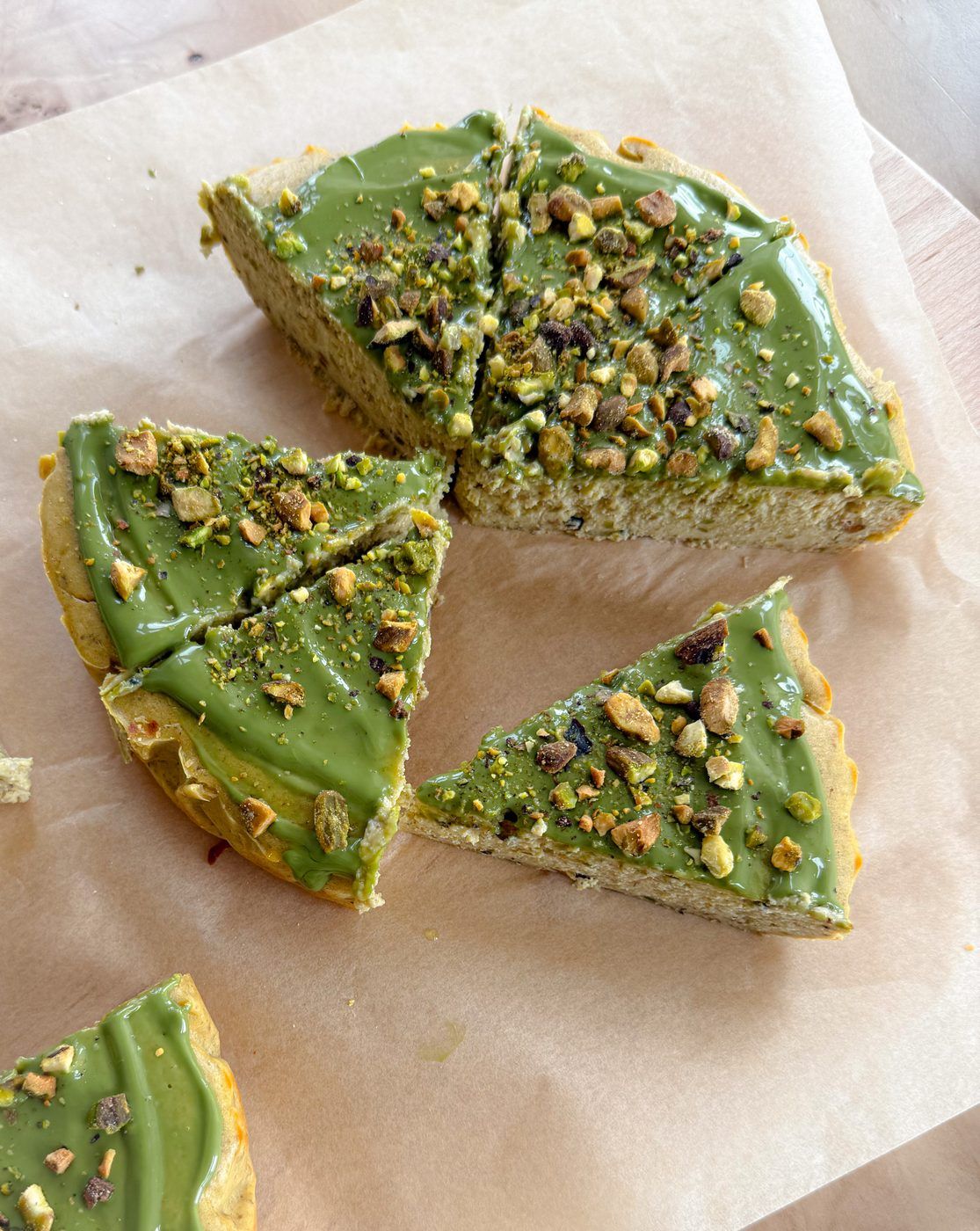
- Slice into 8 generous portions. For the ultimate pistachio cheesecake experience, drizzle with creamy pistachio butter and finish with chopped roasted pistachios!
Notes
Calories: ~325 kcal
Protein: ~19g
Carbohydrates: ~19g
Fat: ~20g
Fiber: ~2g
Macros are estimates using regular cream cheese, 2% cottage cheese, and typical unflavored whey protein. Exact nutrition will vary by brand and ingredient measurements.