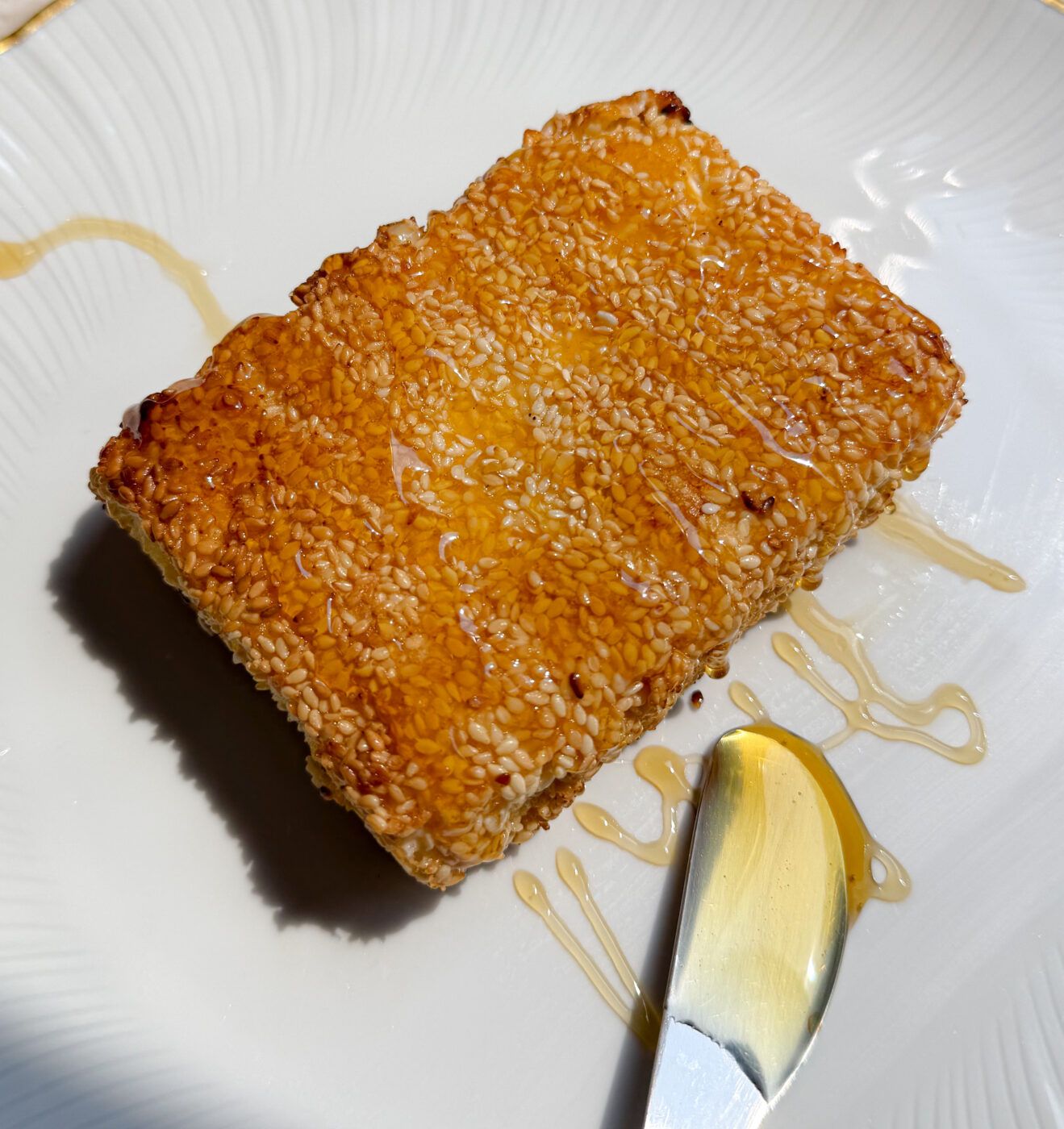
If there is one flavor combination that will always have my Greek heart, it is salty feta and honey. Add a crispy sesame crust and a little extra virgin olive oil, and you have an appetizer that tastes incredibly special despite taking just minutes to make!!
This Crispy Sesame Feta with Honey starts with an entire block of feta that gets double-coated for the BEST texture. First, it goes into egg and a simple mixture of almond flour, tapioca flour, garlic powder and onion powder. Then we dip it back into the egg and completely cover it in sesame seeds.
The whole block goes straight into a skillet with extra virgin olive oil until every side is beautifully golden and crisp. Finish it with a generous drizzle of Greek honey and that is it :).
The outside is crispy and nutty, the feta inside becomes warm and creamy, and the honey gives you that sweet and salty contrast that makes it almost impossible to stop eating.
Is Feta with Honey Actually Greek?
Yes! The combination of salty feta, sesame and honey is very much rooted in Greek flavors.
One traditional preparation you may see in Greece is feta wrapped in phyllo, fried or baked until crispy, and finished with honey and sesame seeds. Sweet and salty combinations involving Greek cheeses and honey are also right at home on a Greek meze table.
My recipe isn’t meant to be a traditional preparation. Think of it as my Greek-inspired, gluten-free shortcut.
Instead of wrapping the feta in phyllo, I create a crispy coating using almond flour, tapioca flour and sesame seeds. You still get that incredible contrast of warm salty cheese, a crispy exterior and sweet honey, but you don’t have to work with phyllo.
As a Greek girl, these are the kinds of flavors I could eat every single day!!
The Ultimate Sweet and Savory Appetizer
I love an appetizer that looks impressive without actually requiring much work, and this one absolutely fits the bill.
You bring an entire golden sesame-crusted block of feta to the table, drizzle honey all over the top, and serve it warm with crackers. It feels restaurant-worthy but takes only a handful of ingredients to make.
It’s salty.
It’s creamy.
It’s crispy.
It’s nutty.
It’s sweet.
Omg.
And somehow all of those flavors work perfectly together.
I especially love serving this when people are coming over because it is a fun alternative to your standard cheese board. Put the feta in the center of a serving plate, surround it with crackers and let everyone break off pieces or spread the warm feta directly onto their crackers.
Why You’ll Love This Crispy Feta
Easy to make: Despite how impressive it looks, the feta only needs about a minute per side in the skillet.
Naturally gluten-free: Almond flour and tapioca flour create the base of our coating, so there is no traditional flour or breadcrumb coating needed.
Perfect for entertaining: Serve the entire block family-style with crackers and let everyone dig in.
Packed with flavor: Feta is already salty and tangy, so it doesn’t need much to turn it into an incredible appetizer.
Amazing texture: You get toasted sesame seeds and a crispy exterior surrounding warm, creamy feta.
Sweet and savory: The Greek honey is the finishing touch that brings everything together.
Why Double Coat the Feta?
This is one step I wouldn’t skip.
The first coating of egg, almond flour and tapioca flour creates a thin barrier around the feta. The almond flour adds richness while the tapioca flour helps create that crisp exterior.
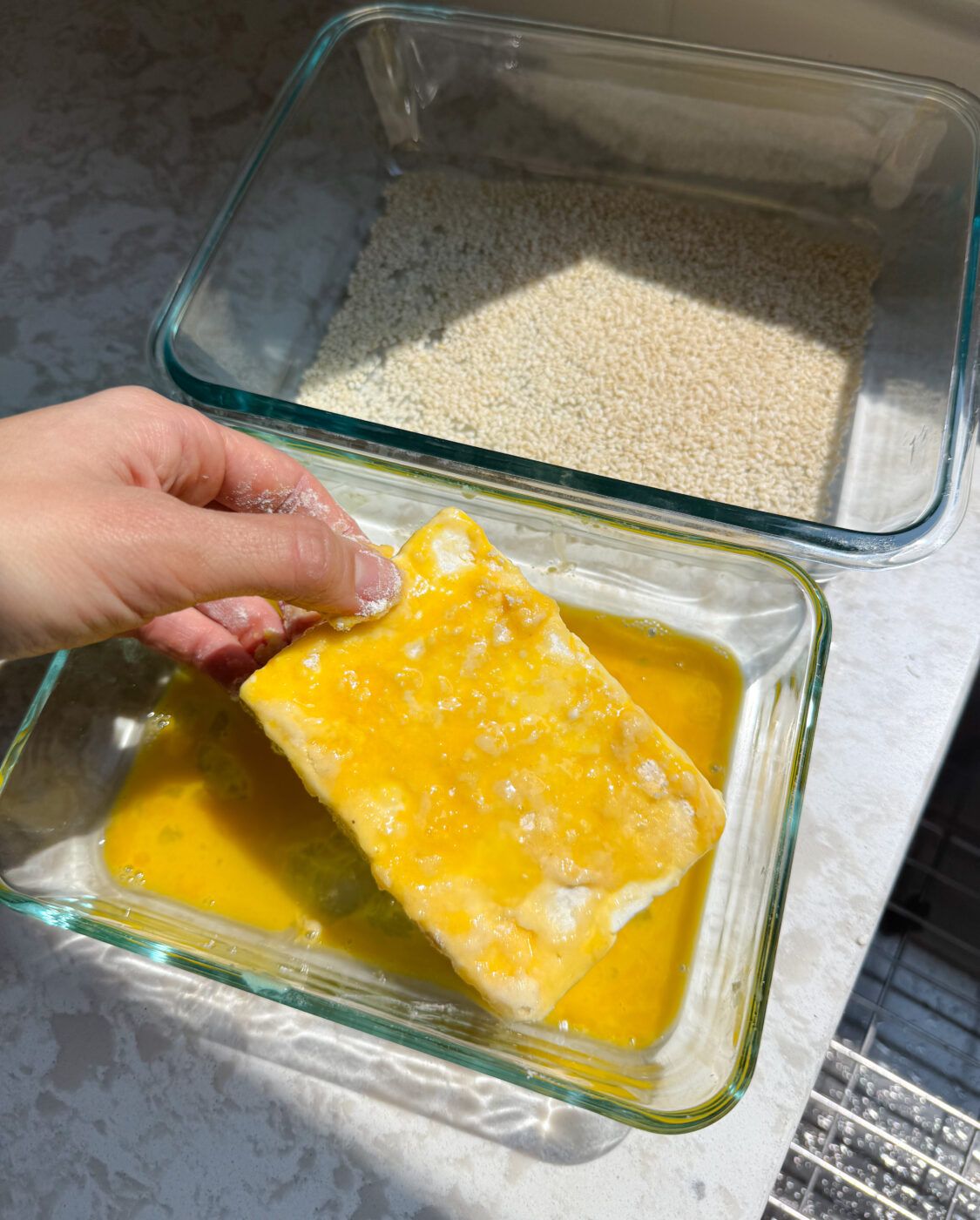
Then the feta goes back into the egg before being completely coated in sesame seeds.
This gives the sesame seeds something to really cling to and creates a much more substantial crust around the cheese.
When it hits the hot olive oil, that exterior turns golden and toasty while the feta inside warms and softens.
SO GOOD.
What Kind of Feta Should I Use?
I recommend using a good-quality block of Greek feta packed in brine.
If you can find authentic Greek feta, even better. Traditional Greek feta is made primarily from sheep’s milk, sometimes with goat’s milk added, and has that beautifully tangy, salty flavor that works so well here.
Avoid pre-crumbled feta for this recipe because you need a solid block that can hold up to dipping, coating and flipping in the skillet.
Most importantly, dry your feta really well before coating it. Feta straight from the brine can hold quite a bit of moisture, and a dry surface will make it much easier for your coating to adhere.
Don’t Skip the Greek Honey
Honey and feta might sound unexpected if you’ve never tried them together, but trust me on this one.
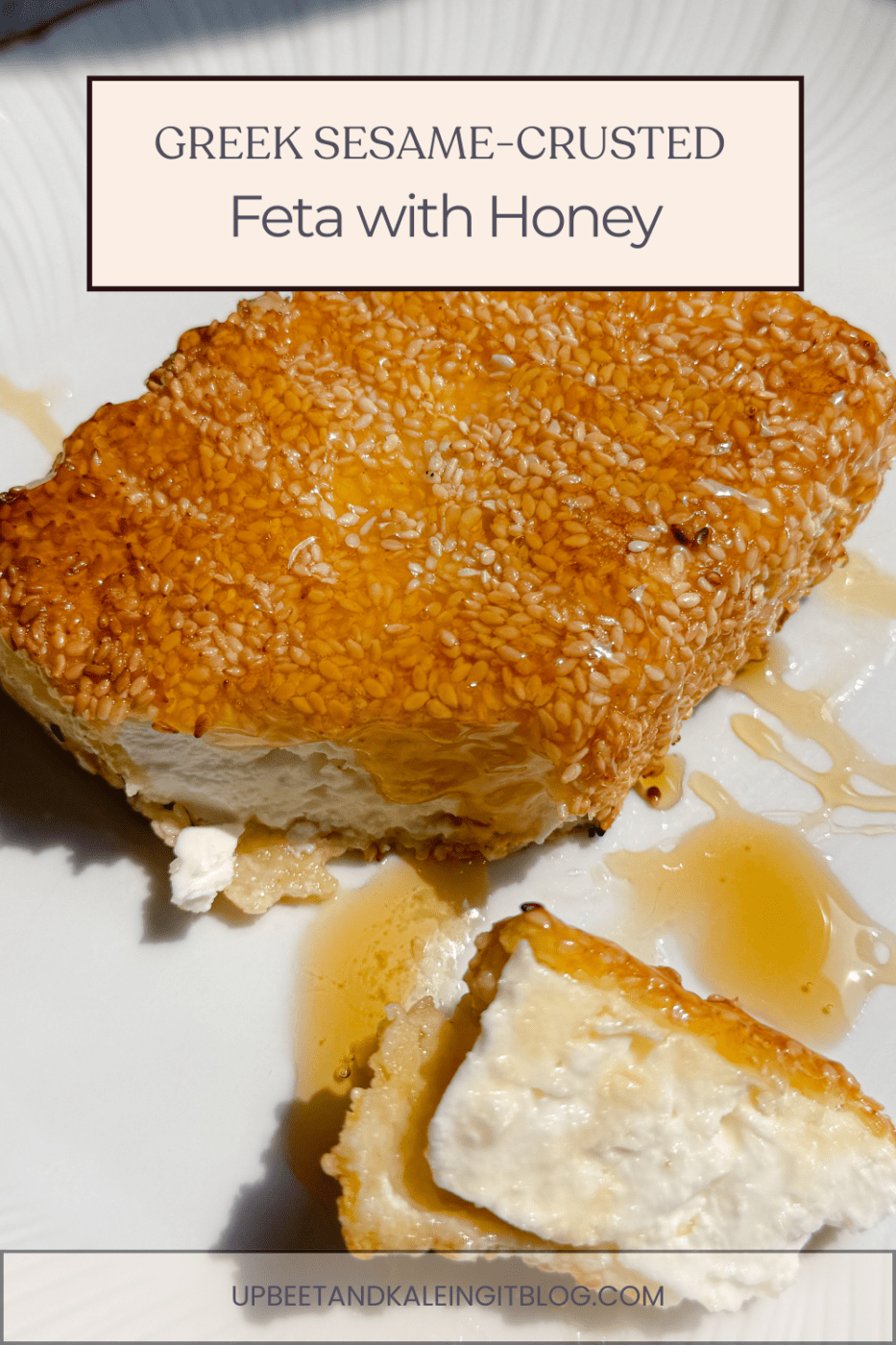
The feta is salty, tangy and rich. The sesame seeds are earthy and nutty. Then you add sweet, floral honey over the warm feta and suddenly everything comes together.
I love using Greek honey here because it fits the Greek-inspired flavors of the dish beautifully. Thyme honey would be especially delicious if you can find it.
You don’t need to completely drown the feta in honey, but I definitely wouldn’t be shy with that drizzle either.
How to Serve Crispy Sesame Feta
My favorite way to serve this is as a savory snack or easy appetizer with crackers.
Place the entire crispy feta block on a serving platter while it’s still warm, drizzle it with honey and surround it with your favorite crackers.
You could also add it to a larger Mediterranean-inspired appetizer spread with olives, cucumbers, tomatoes, hummus, fresh herbs and warm pita or gluten-free flatbread.
For something so simple, it makes such a beautiful centerpiece.
A Greek-Inspired Appetizer You’ll Make on Repeat
There is just something about feta, sesame, olive oil and honey that works every single time.
This Crispy Sesame Feta with Honey takes those classic Greek-inspired flavors and turns them into an easy appetizer you can make at home in minutes.
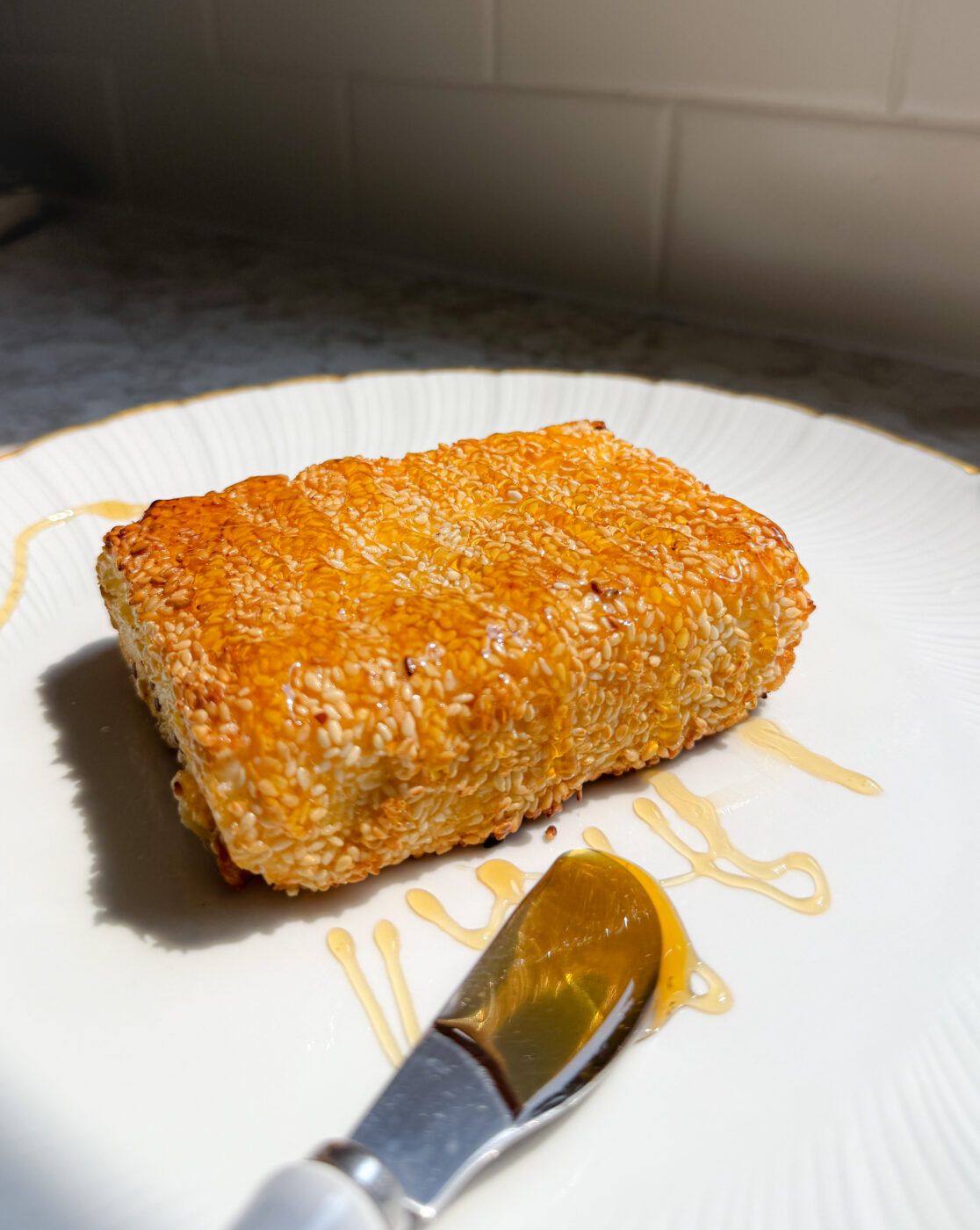
The sesame coating gets golden and crispy, the feta becomes warm and creamy, and that final drizzle of Greek honey makes the salty-sweet combination absolutely irresistible.
Serve it with crackers for an afternoon savory snack, make it for friends when you’re entertaining, or add it to your next Mediterranean-style appetizer spread.
And if you’re already a feta person, consider this your warning. You might never want to eat a plain block of feta again.
Greek Sesame-Crusted Feta with Honey
Ingredients
Method
- Dry the feta. Remove the feta from its brine and pat it very dry with paper towels. Removing excess moisture helps the coating adhere and become golden and crisp.
- Prepare the coating. In a shallow bowl, combine the tapioca flour, almond flour, garlic powder, and onion powder. Add the whisked egg to a separate shallow bowl and the sesame seeds to a third.
- Coat the feta. Carefully dip the entire block of feta into the egg, making sure all sides are coated. Transfer it to the almond flour mixture and gently press the coating onto every side.
- Double dip. Dip the coated feta back into the egg wash, then transfer it to the sesame seeds. Press the sesame seeds onto the feta so the entire block is generously coated.
- Pan fry. Coat the bottom of a skillet with a thin layer of extra virgin olive oil and warm over medium heat. Once hot, add the feta.
- Get it golden. Cook for about 30 seconds to 1 minute per side, carefully turning the feta until the sesame coating is golden brown and crisp. Keep a close eye on it since sesame seeds can toast quickly.
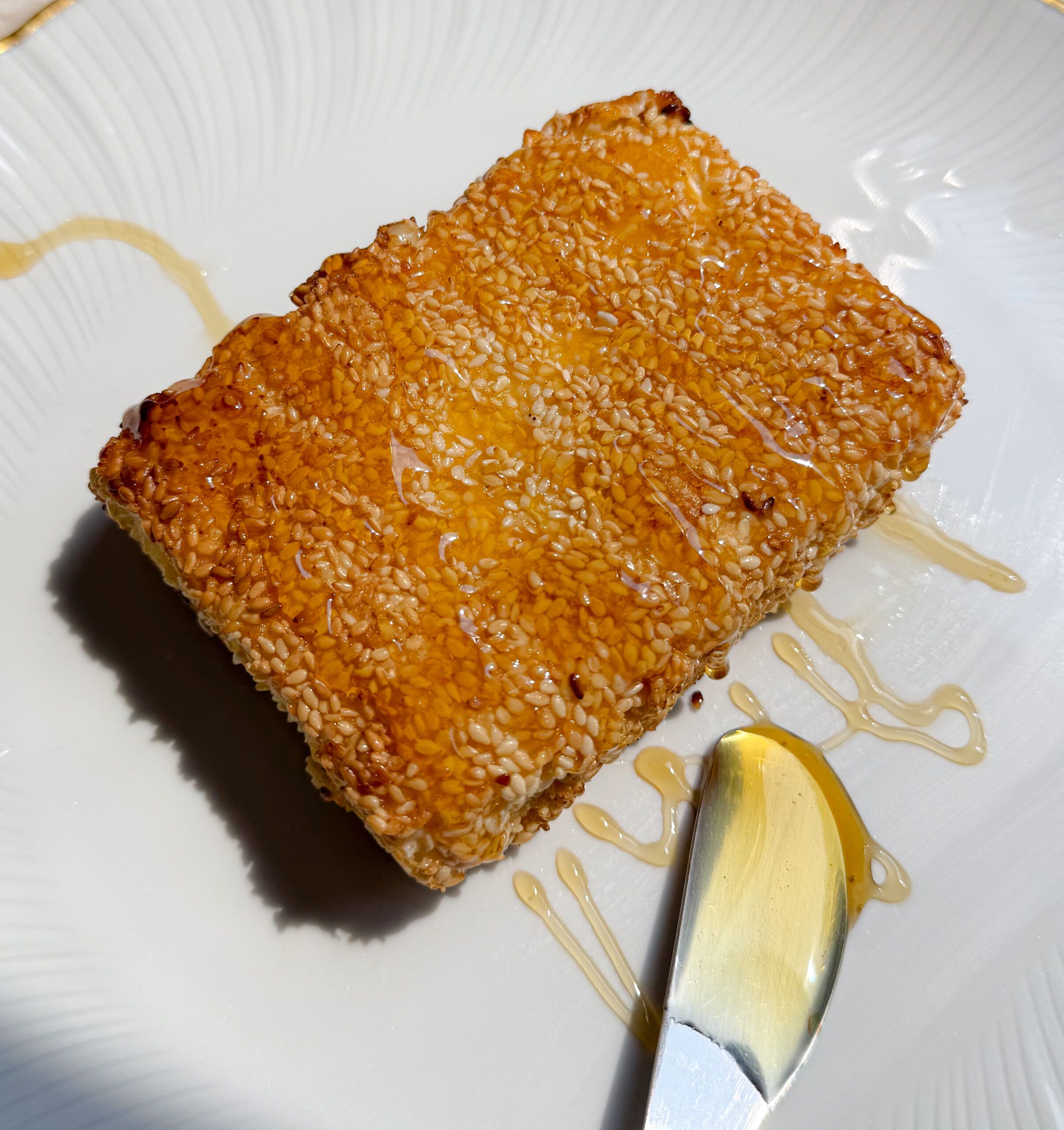
- Finish with honey. Transfer the feta to a serving plate and generously drizzle with Greek honey.
- Serve immediately. Enjoy warm on its own as an appetizer or serve alongside your favorite crackers for scooping and spreading.
Notes
Approximate Macros
For 4 snack-size servings:308 calories | 10g protein | 12g carbs | 24g fat | 3g fiber For 6 appetizer-size servings:
205 calories | 7g protein | 8g carbs | 16g fat | 2g fiber A note on the olive oil: These macros are calculated using an estimated 2 tablespoons of extra virgin olive oil actually absorbed during cooking. You may use around 4 tablespoons of EVOO, or enough to generously coat the bottom of your skillet, but a portion of that oil will remain in the pan after the feta is cooked. Because it is difficult to determine the exact amount absorbed, 2 tablespoons is used as an estimate for the nutrition calculation. Actual macros will vary depending on the amount of oil absorbed, the specific feta used, and how much of the coating adheres to the feta.